
Caesar and Cleopatra
At the height of the Roman Civil War, an aging Julius Caesar finds himself intrigued by the young Egyptian queen Cleopatra, whom he teaches how to rule Egypt.
More Like This
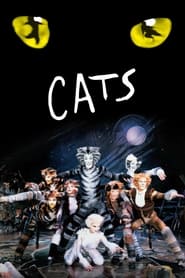
Cats
"Jellicle" cats join for a Jellicle ball where they rejoice with their leader, Old Deuteronomy. One cat will be chosen to go to the "Heavyside Layer" and be reborn.
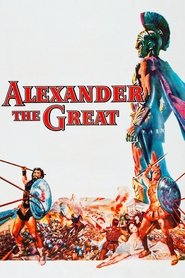
Alexander the Great
An engrossing spectacle set in the 4th-century BC, in which Alexander of Greece leads his troops forth, conquering all of the known world, in the belief that the Greek way of thinking will bring enlightenment to people. The son of the barbaric and ruthless King Philip of Macedonia, Alexander achieved glory in his short but remarkable life.
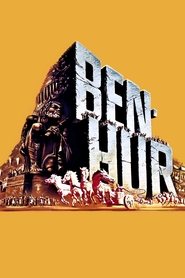
Ben-Hur
In ancient Judea, a Jewish aristocrat opposing Roman occupation of his homeland reunites with his childhood friend, now a Roman commander — setting in motion a saga of betrayal, adventure, tragedy, revenge, and faith.
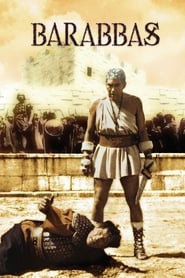
Barabbas
Epic account of the thief Barabbas, who was pardoned for his crimes and spared crucifixion when Pilate offered the Israelites a choice to pardon Barabbas or Jesus. Struggling with his spirituality, Barabbas goes through many ordeals leading him to the gladiatorial arena, where he tries to win his freedom and confront his inner demons, ultimately becoming a follower of the man who was crucified in his place.
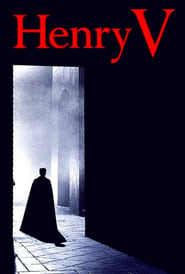
Henry V
In 1415, in the midst of the Hundred Years' War, the young King Henry V of England embarks on the conquest of France.
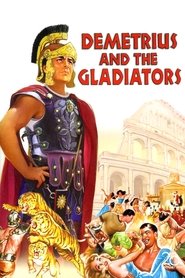
Demetrius and the Gladiators
The story picks up at the point where "The Robe" ends, following the martyrdom of Diana and Marcellus. Christ's robe is conveyed to Peter for safe-keeping, but the emperor Caligula wants it back to benefit from its powers. Marcellus' former slave Demetrius seeks to prevent this, and catches the eye of Messalina, wife to Caligula's uncle Claudius. Messalina tempts Demetrius, he winds up fighting in the arena, and wavers in his faith.
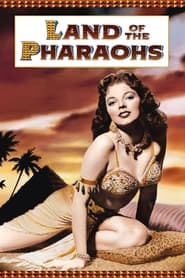
Land of the Pharaohs
A captured architect designs an ingenious plan to ensure the impregnability of the tomb of a self-absorbed Pharaoh, obsessed with the security of his next life.

Man of La Mancha
In the 16th century, poet, playwright and part-time actor Miguel de Cervantes has been arrested, together with his manservant, by the Spanish Inquisition. They're accused of presenting an entertainment offensive to the Inquisition. Inside the huge dungeon into which they have been cast, the other inmates gang up on Cervantes and his manservant, staging a mock trial, with the intention of stealing or burning his possessions. Cervantes wishes to desperately save a manuscript he carries with him and stages, with costumes, makeup, and the participation of the other prisoners, an unusual defense—the story of Don Quixote.
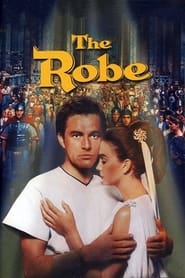
The Robe
Drunk and disillusioned Roman, Marcellus Gallio, wins Jesus' robe in a dice game after the crucifixion. Marcellus has never been a man of faith like his slave, Demetrius, but when Demetrius escapes with the robe, Marcellus experiences disturbing visions and feels guilty for his actions. Convinced that destroying the robe will cure him, Marcellus sets out to find Demetrius — and discovers his Christian faith along the way.
Agora
A historical drama set in Roman Egypt, concerning philosopher Hypatia of Alexandria and her relationship with her slave Davus, who is torn between his love for her and the possibility of gaining his freedom by joining the rising tide of Christianity.

Nicholas and Alexandra
Tsar Nicholas II, the inept last monarch of Russia, insensitive to the needs of his people, is overthrown and exiled to Siberia with his family.
One Night with the King
In Biblical times, a girl disguises her Jewish origins when the Persian king comes looking for a new bride among his subjects.

Wittgenstein
A dramatization, in modern theatrical style, of the life and thought of the Viennese-born, Cambridge-educated philosopher Ludwig Wittgenstein, whose principal interest was the nature and limits of language. A series of sketches depict the unfolding of his life from boyhood, through the era of the first World War, to his eventual Cambridge professorship and association with Bertrand Russell and John Maynard Keynes. The emphasis in these sketches is on the exposition of the ideas of Wittgenstein, a homosexual, and an intuitive, moody, proud, and perfectionistic thinker generally regarded as a genius.
The Fall of the Roman Empire
In the year 180 A.D. Germanic tribes are about to invade the Roman empire from the north. In the midst of this crisis ailing emperor Marcus Aurelius has to make a decision about his successor between his son Commodus, who is obsessed by power, and the loyal general Gaius Livius.

The Last Rifleman
A WWII veteran escapes his care home in Northern Ireland and embarks on an arduous but inspirational journey to France to attend the 75th anniversary of the D-Day landings, finding the courage to face the ghosts of his past.

Richard III
Having helped his brother King Edward IV take the throne of England, the jealous hunchback Richard, Duke of Gloucester, plots to seize power for himself. Masterfully deceiving and plotting against nearly everyone in the royal court, including his eventual wife, Lady Anne, and his brother George, Duke of Clarence, Richard orchestrates a bloody rise to power before finding all his gains jeopardized by those he betrayed.

Maria
Maria Callas, the world's greatest opera singer, lives the last days of her life in 1970s Paris, as she confronts her identity and life.

The Lost King
An amateur historian defies the academic establishment in her efforts to find King Richard III's remains, which were lost for over 500 years.